
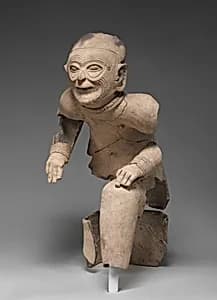
Seated elder
200 BCE–400 CE
Medium
Ceramic
Dimensions
H. 25 in. × W. 14 1/2 in. × D. 18 3/4 in. (63.5 × 36.8 × 47.6 cm)
Classification
Ceramics-Sculpture
Culture
Tolita-Tumaco
Department
Arts of Africa, Oceania, and the Americas
Museum
Metropolitan Museum of Art, New York, NY
Credit
Gift of Gertrud A. Mellon, 1982
Accession Number
1982.231
Rights
Public Domain
Tags
Art Historical Context
Behold the *Seated Elder*, a striking ceramic sculpture crafted by a Tolita-Tumaco artist between 200 BCE and 400 CE. Hailing from the ancient Tolita-Tumaco culture along the Pacific coast of present-day Ecuador and Colombia, this piece exemplifies the pre-Columbian mastery of fired clay. Standing at an impressive 25 inches tall, its substantial form—measuring 25 × 14½ × 18¾ inches—suggests it was a significant cultural object, possibly used in rituals or as a status symbol. The figure depicts a dignified older man seated with poise, his posture conveying wisdom and authority. Tolita-Tumaco ceramics are renowned for their naturalistic yet stylized human forms, often featuring elaborate details like jewelry or headdresses that highlight social hierarchies. Techniques such as modeling, incising, and slip decoration brought texture and life to the surface, with the clay's warm earth tones evoking the region's fertile landscapes. This artwork's survival speaks to the durability of their firing methods. A generous gift to the Metropolitan Museum of Art from Gertrud A. Mellon in 1982, the *Seated Elder* offers a window into Tolita-Tumaco society, where elders likely held revered roles in community and spiritual life. It reminds us of the sophisticated artistry of these early Americas cultures, bridging ancient traditions to our modern gaze.