
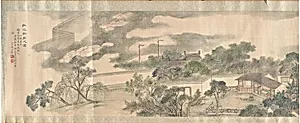
清 楊天壁 敬芝軒第貳圖 卷|Second View of the Studio for Respecting the Fungus of Longevity
1825
Medium
Handscroll; ink and color on silk
Dimensions
8 3/8 x 31 in. (21.3 x 78.7 cm)
Classification
Paintings
Culture & Period
China · Qing dynasty (1644–1911)
Department
Asian Art
Museum
Metropolitan Museum of Art, New York, NY
Credit
Gift of Heber R. Bishop, 1902
Accession Number
02.18.623e
Rights
Public Domain
Tags
Art Historical Context
Created in 1825 during China's Qing dynasty (16441911), *Second View of the Studio Respecting the Fungus Longevity* is a handscroll by the artist Yang Tianbi. just 8⅜ x 31 inches, ink and color on silk painting captures an intimate landscape scene centered on a pavilion—or "studio"—named for lingzhi, the revered fungus symbolizing immortality and longevity in Chinese. As the "second view" in a likely series, it invites viewers to unroll the scroll slowly, revealing layered vistas of trees and natural surroundings that evoke a scholar's serene retreat. Handscrolls like this were prized in Qing literati circles for their portability and private appreciation, allowing contemplation of nature's harmony—a core theme in Chinese landscape painting. Yang Tianbi's use of ink and subtle colors on silk highlights fine brushwork, with trees rendered in textured strokes that suggest depth and seasonal vitality. This format underscores the era's blend of poetic idealism and meticulous observation. Housed in the Metropolitan Museum of Art's Asian Art Department since 1902, thanks to donor Heber R. Bishop, the work reflects Qing artistry's enduring celebration of longevity and tranquility amid imperial decline. A perfect gem for pondering life's fleeting beauty.