
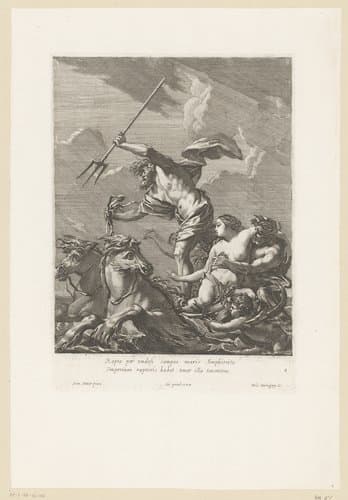
Serie van prenten naar de schilderijen van Fontainebleau
1644
Medium
engraving
Dimensions
288; 207
Rights
Public Domain
About this artwork
plaatrand: hoogte 288 mm x breedte 207 mm
Art Historical Context
Michel Dorigny's 1644 engraving belongs to a series reproducing paintings from the Palace of Fontainebleau, the famed French royal residence that became a cradle of Mannerist art in the sixteenth century. Working in the medium of engraving, Dorigny translated the fluid figures, elaborate decorative schemes, and mythological subjects originally painted by artists such as Rosso Fiorentino and Primaticcio into precise lines that could travel far beyond the château walls. At 288 by 207 millimeters, each plate demonstrates the reproductive print’s power to preserve and popularize courtly imagery for collectors and artists across Europe. In an age before photography, such engravings served as both documentary records and independent works of art, allowing viewers to study Fontainebleau’s sophisticated blend of Italian elegance and French refinement from afar. Dorigny’s careful technique—combining crisp outlines with subtle tonal gradations—captures the graceful proportions and ornamental richness of the originals while adding the distinctive clarity that engraving alone can achieve. The series thus stands as a bridge between Renaissance painting and the print culture of the seventeenth century.
About the Artist
Michel Dorigny · 1616–1665
French painter. Comment on works: Painter; History; Portrait; Engraver; Religious; Mythology; Draughtsman