
Servet van linnendamast
c. 1963 - c. 1971
Medium
damask
Dimensions
69; 68.5
Rights
Public Domain
About this artwork
hoogte 69 cm x breedte 68,5 cm
Art Historical Context
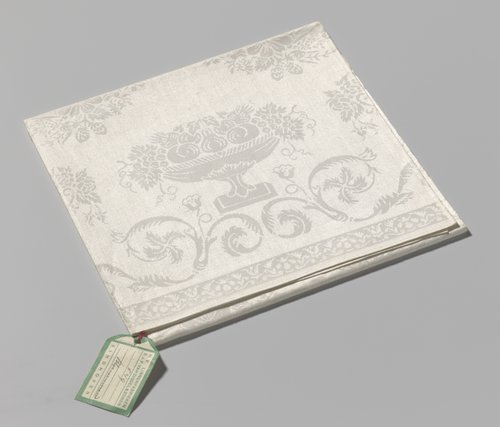
Behold the *Servet van linnast*, a finely crafted linen damask napkin from approximately 1963 to 1971, created by an anonymous artisan. Measuring about 69 cm high by 68.5 cm wide, this modest yet elegant piece exemplifies mid-20th-century textile artistry, likely produced in the Netherlands given its Dutch nomenclature. As a table linen, it served both practical and decorative purposes in daily life, reflecting the enduring appeal of high-quality household goods during the post-war era. Damask, the medium here, is a sophisticated weaving technique dating back centuries, where patterns emerge through the reversible interplay of satin and sateen weaves in linen threads. This creates a subtle sheen and texture that shifts with light, making the fabric luxurious without ostentation. Linen damask was prized for its durability, absorbency, and prestige—think of grand Dutch dining tables adorned with such servetten, blending functionality with subtle opulence. In the 1960s and early 1970s, as modernism swept design, anonymous makers preserved traditional crafts amid industrialization. This napkin whispers of cultural continuity: a tactile link to heritage, inviting us to appreciate the unseen skill in everyday elegance. Perfect for museum contemplation, it reminds us how textiles weave history into our lives.
About the Artist
anonymous
In the vast tapestry of art history, "Anonymous" stands not as a singular individual but as a collective designation for countless unidentified creators whose works have endured across millennia. These artists, spanning prehistoric cave painters to medieval illuminators and folk craftsmen, produced the foundational layers of human visual culture. Prior to the Renaissance, when individual fame emer...