
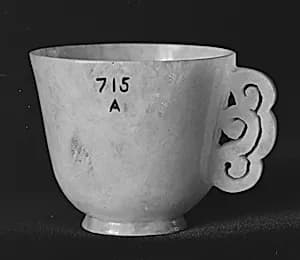
Set of Eight Wine Cups
Unknown Artist
1796–1875
Medium
Jadeite
Dimensions
H. 1 1/2 in. (3.8 cm); W. 2 1/16 in. (5.2 cm)
Classification
Jade
Culture & Period
China · Qing dynasty (1644–1911)
Department
Asian Art
Museum
Metropolitan Museum of Art, New York, NY
Credit
Gift of Heber R. Bishop, 1902
Accession Number
02.18.715a–h
Rights
Public Domain
Art Historical Context
This exquisite set of eight wine cups, crafted from jadeite during the Qing dynasty (1644–1911), dates to between 1796 and 1875. Each small vessel measures just 1 1/2 inches high and 2 1/16 inches wide, perfectly suited for intimate sips of rice wine during elegant banquets or scholarly gatherings. Jadeite, a vivid green variety of jade rarer than nephrite in China, was highly prized for its translucency and durability, often reserved for imperial workshops and elite collectors. In Qing China, jade carving reached new heights of technical sophistication, with artisans employing intricate lathe-turning and polishing techniques to achieve smooth, flawless surfaces that mimic porcelain or glass. These cups exemplify the period's reverence for jade as a symbol of purity, immortality, and moral virtue—qualities rooted in Confucian ideals. Sets like this were status symbols, used in refined social rituals that blended artistry with cultural etiquette. Generously gifted to the Metropolitan Museum of Art in 1902 by Heber R. Bishop, this ensemble offers a window into late imperial luxury. Pause to admire their subtle luster, a testament to centuries-old mastery in Asian jade traditions.