
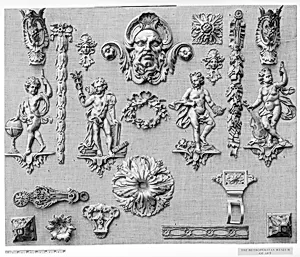
Set of four panel ornaments
Unknown Artist
17th–18th century
Medium
Gilt bronze
Dimensions
Height (.81a): 12 in. (30.5 cm); Height (.81b): 11 in. (27.9 cm); Height (.81c): 10 1/2 in. (26.7 cm); Height (.81d): 11 in. (27.9 cm)
Classification
Metalwork-Gilt Bronze
Culture
French
Department
European Sculpture and Decorative Arts
Museum
Metropolitan Museum of Art, New York, NY
Credit
Gift of J. Pierpont Morgan, 1906
Accession Number
07.225.510.81a–d
Rights
Public Domain
Tags
Art Historical Context
This elegant set of four gilt bronze ornaments, crafted in France during the lavish 17th–18th centuries, exemplifies the opulence of the Baroque and Rococo periods. Standing between 10½ and 12 inches tall, these pieces feature dynamic male nudes—likely inspired by classical antiquity—posed in graceful, muscular forms that evoke mythological heroes or allegorical figures. Their varying heights suggest they were designed as harmonious decorative mounts for furniture panels, cabinets, or wall applications, adding a touch of grandeur to aristocratic interiors. Gilt bronze was a hallmark of French decorative arts, achieved through meticulous techniques like fire-gilding, where a mercury-gold amalgam was applied and heated to create a durable, radiant finish. These ornaments reflect the era's fascination with the nude body as a symbol of vitality and ideal beauty, blending Renaissance humanism with the exuberant ornamentation favored at Versailles. Such metalwork elevated everyday objects into art, showcasing the skilled bronziers of Paris workshops. A generous gift from financier J. Pierpont Morgan in 1906, this set now graces the Metropolitan Museum of Art's European Sculpture and Decorative Arts collection, offering visitors a glimpse into the refined splendor of ancien régime France.