
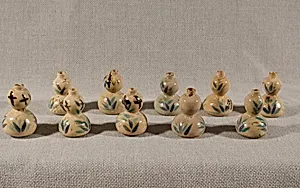
Set of Ten Gourd-Shaped Vessels with Reed Design
Unknown Artist
18th century
Medium
Stoneware with overglaze enamels and gold (Kyoto ware)
Dimensions
H. 1 7/8 in. (4.8 cm)
Classification
Ceramics
Culture & Period
Japan · Edo period (1615–1868)
Department
Asian Art
Museum
Metropolitan Museum of Art, New York, NY
Credit
Gift of Mr. and Mrs. Yukikazu Iwasa, in memory of Mr. and Mrs. Seizaburo Iwasa, 2001
Accession Number
2001.610.2.4
Rights
Public Domain
Art Historical Context
This delightful set of ten gourd vessels, crafted in the 18th century Japan's Edo period (1615–1868), the exquisite Kyoto ware tradition. Made from stoneware adorned with vibrant overglaze enamels gold, these diminutive pieces—standing just 1 7/8 inches (4.8 cm) tall—feature a reed design that evokes the graceful sway of riverside plants. Kyoto ware, produced in the imperial capital, was renowned for its technical sophistication, blending durable stoneware bodies with colorful, layered enamels fired at lower temperatures to create intricate, jewel-like decorations. In the prosperous Edo era, ceramics like these flourished amid a booming urban culture, where artisans catered to tea ceremonies, domestic rituals, and connoisseurship. The gourd form, symbolizing abundance and longevity in Japanese folklore, paired with naturalistic reeds, reflects the period's appreciation for subtle elegance and seasonal motifs. Overglaze enameling allowed for bold polychrome effects and shimmering gold accents, techniques that elevated everyday objects into art. Today, this gift to the Metropolitan Museum of Art from Mr. and Mrs. Yukikazu Iwasa honors a family legacy while inviting us to marvel at Edo Japan's masterful blend of utility and beauty. Perfect for sake cups or incense holders, they whisper stories of refined leisure.