
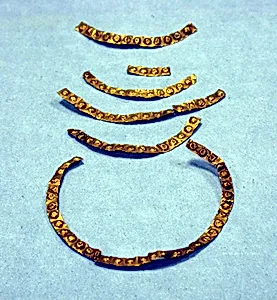
Seven Hammered Gold Strips
Unknown Artist
200–900 CE
Medium
Gold
Dimensions
Diameter 2-5/8 in.
Classification
Metal-Ornaments
Culture
Peruvian
Department
Arts of Africa, Oceania, and the Americas
Museum
Metropolitan Museum of Art, New York, NY
Credit
Gift of Mr. and Mrs. Nathan Cummings, 1964
Accession Number
64.228.374a-g
Rights
Public Domain
Art Historical Context
These delicate **Seven Hammered Gold St** hail from ancient Peru, crafted between 200–900 CE during the vibrant pre-Columbian era Each strip measures about 2-5/8 inches in diameter, formed from pure gold hammered into thin, flexible sheets—a testament to the skilled metalworkers of Andean cultures. Likely worn as earrings, headdress ornaments, or ceremonial adornments, these pieces shimmer with the luster of gold, a metal revered for its solar associations and divine qualities. The technique of hammering gold involved painstakingly beating nuggets into ultra-thin foils, allowing artisans to shape them without melting—a sophisticated process that highlighted Peru's early mastery of metallurgy. Thriving in regions like the north and central coast, such works reflect the ingenuity of societies like the Moche or Vicús, where gold ornaments signified status, wealth, and spiritual power. Today, these treasures reside in the Metropolitan Museum of Art's Department of the Arts of Africa, Oceania, and the Americas, thanks to a generous 1964 gift from Mr. and Mrs. Nathan Cummings. They offer visitors a glimpse into Peru's golden legacy, inviting wonder at how ancient hands transformed humble metal into symbols of eternity.