
Shabti box and shabtis of members of the Sennedjem tomb
Unknown Artist
ca. 1279–1213 B.C.
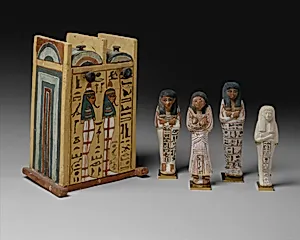
Medium
Painted wood, limestone, and ink
Dimensions
Shabti box (86.1.14): H. 28.5 cm (11 1/4 in.) Shabti of Khaibekhnet and Iineferty (86.1.18): H. 16.7 cm (6 9/16 in). Shabti of Khonsu (86.1.21): H. 17.7 cm (6 15/16 in.) Shabti of Khaibekhnet (67.80): H. 18.6 cm (7 5/16 in.) Shabti of Mesu (86.1.28): H. 15 cm (5 7/8 in.)
Classification
Shabti box, Paramnekhu
Period
New Kingdom, Ramesside
Department
Egyptian Art
Museum
Metropolitan Museum of Art, New York, NY
Credit
Funds from various donors, 1886 (86.1.14, .18, .21, .28) Gift of J. Lionberger Davis, 1967 (67.80)
Accession Number
86.1.14-related
Rights
Public Domain
Art Historical Context
Step into the afterlife preparations of ancient Egypt with this exquisite *Shabti box and shabtis* the tomb of Senned, dating to the New Kingdom's Ramesside period (. 1279–1213 B.C.), Dynasty 19. Shabtis—small servant figurines—were vital magical aides for the deceased, inscribed with spells from the *Book of the Dead* to labor in the afterlife, allowing the elite like Sennedjem, a scribe and foreman, eternal rest. The wooden box (H. 28.5 cm) housed these limestone and painted wood figures, including those of Khaibekhnet, Iineferty, Khonsu, and Mesu, each around 15–18.6 cm tall. Crafted with ink and vibrant paints on wood and limestone, these artifacts showcase the skilled artisans of Deir el-Medina, Egypt's village of tomb builders. Fine hieroglyphic inscriptions and stylized human forms highlight the era's naturalistic yet idealized style, blending functionality with artistry. The shabtis' mummiform poses, tools in hand, embody the Egyptians' belief in immortality. Housed in the Metropolitan Museum of Art's Egyptian Art department, these pieces (acquired 1886 and 1967) offer a window into Ramesside burial customs, where even the afterlife demanded diligent workers. A testament to enduring cultural reverence for the eternal journey.