
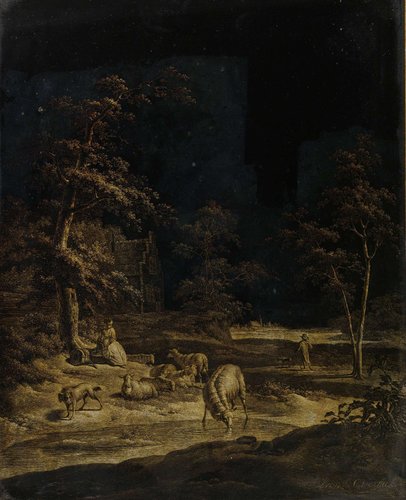
Shepherdess with Sheep
1780 - 1815
Medium
verre églomisé
Dimensions
28.8; 2; 35; 42.5; 35.5
Rights
Public Domain
About this artwork
Gift of E.S. Kramer, The Hague and J.J. Kramer, The Hague
Art Historical Context
Welcome to the Rijksmuseum's charming display of *Shepherdess with Sheep by Leendert Overbeek, created between 1780 and1815. This intimate panel, measuring 35.5 cm high by 28.8 cm wide, a serene pastoral scene—a young shepherdess tending her flock amid a gentle landscape. Donated by E.S. and J.J. Kramer from The Hague, it exemplifies the enduring appeal of rural idylls in Dutch art during the late Enlightenment and early Romantic eras, evoking nostalgia for simple, harmonious country life. The artwork's standout feature is its *verre églomisé* technique, a refined method popular in 18th- and 19th-century Europe. Here, a sheet of glass is backed with gold or silver leaf, then meticulously painted in reverse from the back, allowing light to illuminate the metallic glow and create a luminous, jewel-like depth. Overbeek, a skilled Dutch practitioner of this craft, used it for decorative panels and small-scale scenes, blending folk art traditions with elegant sophistication. This medium was prized for its durability and brilliance, often adorning bourgeois homes as affordable alternatives to oil paintings. Though modest in size, the piece reflects broader cultural shifts toward romanticizing nature and everyday virtues amid urbanization. Its preservation in the Rijksmuseum highlights the technique's niche but vibrant legacy in Dutch decorative arts, inviting visitors to appreciate the delicate interplay of light and shadow in this timeless vignette.