
Sho (笙)
Unknown Artist
19th century
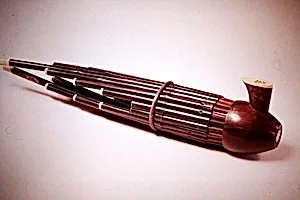
Medium
wood, metal
Dimensions
L. 16 1/2 × bowl diam. 3 in. (41.9 × 7.6 cm)
Classification
Aerophone-Free Reed-mouth organ
Culture
Japanese
Department
Musical Instruments
Museum
Metropolitan Museum of Art, New York, NY
Credit
The Crosby Brown Collection of Musical Instruments, 1889
Accession Number
89.4.97
Rights
Public Domain
Art Historical Context
Nestled in the Metropolitan Museum of Art's Department of Musical Instruments, this19th-century *sho* (笙) is a captivating example of Japanese craftsmanship. Crafted from wood and metal, the instrument 16½ inches in length with a bowl diameter of 3 inches, embodying delicate balance of form and function typical of traditional Japanese aerophones. As a free reed mouth organ it produces ethereal, harmonious tones by vibrating thin metal reeds when air is blown through its pipes, a technique that highlights the ingenuity of its anonymous maker. The *sho* holds profound cultural significance in Japan, where it has been integral to gagaku, the ancient imperial court music performed for over a millennium. Dating to the 19th century, this piece reflects the Meiji era's blend of enduring traditions and subtle modernization, preserving sounds that evoke serenity and ritual. Its inclusion in The Crosby Brown Collection of Musical Instruments, acquired in 1889, underscores early Western fascination with global musical heritage. Visitors are invited to imagine the *sho*'s resonant timbre filling palace halls, a testament to how sound sculptures like this bridge art, music, and history.