
Shofar
Unknown Artist
19th century
Medium
Animal horn
Dimensions
Length-of tube 45.5 cm (17-15/16 in.), Diam. of bell- widest 5.6 cm
Classification
Aerophone-Lip Vibrated-horn
Culture
European
Department
Musical Instruments
Museum
Metropolitan Museum of Art, New York, NY
Credit
The Crosby Brown Collection of Musical Instruments, 1889
Accession Number
89.4.373
Rights
Public Domain
Art Historical Context
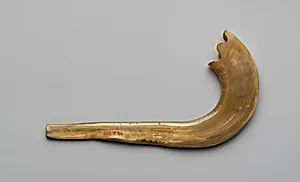
Nestled in the Metropolitan Museum of Art's Department of Musical Instruments, this19th-century *Shofar* exemplifies a simple yet profound aerophone—a lip-vibrated horn crafted from an animal horn. Measuring 45.5 cm in tube length with a bell diameter of 5.6 cm at its widest, its form is elegantly organic, shaped by nature and refined by human hand. Part of the esteemed Crosby Brown Collection acquired in 1889, it invites visitors to appreciate the tactile beauty of natural materials in musical artistry. Originating from European culture, this shofar reflects traditions where such horns served ceremonial roles, producing resonant blasts through the vibration of the player's lips against the natural mouthpiece. Unlike more ornate European instruments of the era, its unadorned design highlights minimalist functionality, emphasizing sound over decoration. The 19th-century date places it amid a period of cultural preservation, when folk and ritual objects were increasingly valued by collectors like Crosby Brown. As a classification of aerophone, the shofar underscores the ingenuity of ancient instrument-making techniques persisting into modern times. Visitors can imagine its piercing calls echoing through gatherings, bridging everyday materials with spiritual or communal significance—a testament to Europe's diverse sonic heritage.