
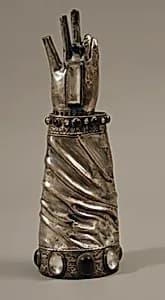
Shrine of Saint Patrick's Hand
Unknown Artist
early 20th century (original dated 14th century)
Medium
Silver, gem stones
Dimensions
15 1/4 x 5 1/4 x 4 1/4 in. (38.7 x 13.3 x 10.8 cm)
Classification
Reproductions-Metalwork
Culture
Irish
Department
Medieval Art
Museum
Metropolitan Museum of Art, New York, NY
Credit
Rogers Fund, 1908
Accession Number
08.233.5
Rights
Public Domain
Art Historical Context
Behold the **Shrine of Saint Patrick's**, a stunning early 20th-century reproduction a 14th-century Irish original, crafted in gleaming silver adorned with gemstones. Measuring 15¼ x 5¼ x 4¼ inches, this intricate metalwork reliquary designed to house a sacred relic—believed to be the hand of Ireland's patron saint, St. Patrick. Acquired through the Rogers Fund in 1908, it now graces the Medieval Art department at The Metropolitan Museum of Art, offering a tangible link to Ireland's devout Christian past. In medieval Ireland, such shrines were masterpieces of ecclesiastical metalwork, blending artistry with profound religious devotion. Artisans employed sophisticated techniques like repoussé, chasing, and enameling to create ornate containers that protected and venerated holy remains, drawing pilgrims seeking miracles. The use of silver and precious gems symbolized divine splendor, elevating everyday faith into something transcendent. This reproduction faithfully captures the original's elaborate filigree and symbolic motifs, reflecting the Gaelic tradition of craftsmanship during a time when Ireland's monasteries were cultural beacons amid turbulent history. For visitors, this piece whispers tales of St. Patrick's legendary conversion of Ireland in the 5th century, whose enduring legacy inspired such opulent tributes centuries later. A testament to cultural piety and technical virtuosity, it invites reflection on how art preserves the sacred.