
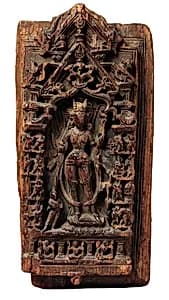
Shrine Relief Fragment Depicting Ashtamahabhaya Tara, the Buddhist Savioress
Unknown Artist
10th–11th century
Medium
Wood
Dimensions
H. 17 3/4 in. (45.1 cm); W. 8 5/8 in. (21.9 cm); D. 2 5/8 in. (6.7 cm)
Classification
Sculpture
Culture
India (Himachal Pradesh)
Department
Asian Art
Museum
Metropolitan Museum of Art, New York, NY
Credit
Gift of Evelyn Kossak, The Kronos Collections, 1994
Accession Number
1994.488
Rights
Public Domain
Tags
Art Historical Context
This exquisite wood relief fragment from 10th–11th Himachal Pradesh, India, Ashtamahabhaya Tara, one of the revered forms of the Buddhist savioress Tara. Known as the "ara of the Eight Great Fears," she embodies compassionate protection against life's perils—such as lions, elephants, fire, and snakes—offering devotees spiritual refuge. Carved in high relief, her serene yet powerful visage likely once adorned a wooden shrine, inviting worshippers to meditate on her liberating grace amid the Himalayan region's turbulent history. Crafted from wood, a favored medium in the Western Himalayas for its workability and availability, this sculpture reflects the era's masterful fusion of Indian and regional styles. Artisans employed intricate carving techniques to convey Tara's dynamic posture and symbolic attributes, emphasizing her role in Vajrayana Buddhism's tantric traditions. Himachal Pradesh temples, often built of deodar cedar, featured such panels, blending architecture with devotion. Measuring 17 3/4 inches high, this fragment—now at the Metropolitan Museum of Art—offers a glimpse into medieval India's vibrant Buddhist heritage, where female deities like Tara rose in prominence, symbolizing enlightenment's accessibility to all. A timeless testament to faith's enduring artistry.