
Shu Amulet
Unknown Artist
664–332 B.C.
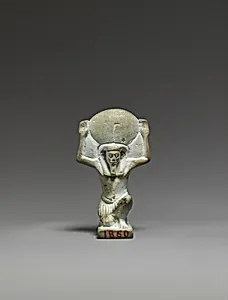
Medium
Faience
Dimensions
H. 3.5 cm (1 3/8 in.); W. 2.1 cm (13/16 in.); D. 1.8 cm (11/16 in.)
Classification
Amulet, Shu
Period
Late Period
Department
Egyptian Art
Museum
Metropolitan Museum of Art, New York, NY
Credit
Gift of Darius Ogden Mills, 1904
Accession Number
04.2.372
Rights
Public Domain
Art Historical Context
Nestled in the Metropolitan Museum of Art's Egyptian Art collection, this petite faience amulet depicts Shu, the ancient Egyptian god of air and light, dating to the Late Period (664–332 B.C.), specifically Dynasties 26–30. Crafted from vibrant blue-green faience—a glazed ceramic made from crushed quartz, popular for its luminous, life-affirming color—this 3.5 cm tall figure exemplifies the era's revival of traditional religious iconography amid Persian and Greek influences. Shu is typically shown striding forward with arms raised, symbolizing his role in separating the sky goddess Nut from the earth god Geb, upholding cosmic order. Amulets like this were ubiquitous in daily life and burials, serving as protective talismans. Worn or placed on mummies, they invoked Shu's powers of peace, wind, and elevation, ensuring the wearer's spirit could rise safely in the afterlife. Faience's glossy finish, achieved through sophisticated molding and low-fired glazing techniques, made these affordable objects accessible to all social classes, blending artistry with everyday magic. Gifted to the Met in 1904 by Darius Ogden Mills, this Shu amulet offers a window into Late Period piety, where personal devotion sustained Egypt's ancient beliefs through turbulent times. A charming testament to the enduring allure of Egyptian spirituality!