
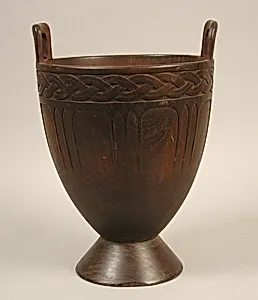
Situla
Unknown Artist
early 20th century (original dated 15th century (?))
Medium
Wood
Dimensions
Overall: 14 1/4 x 10 1/4 in. (36.2 x 26 cm)
Classification
Reproductions-Woodwork
Culture
Irish
Department
Medieval Art
Museum
Metropolitan Museum of Art, New York, NY
Credit
Rogers Fund, 1911
Accession Number
12.4.8
Rights
Public Domain
Art Historical Context
Welcome to the Medieval Art galleries at the Metropolitan Museum of Art where you'll find this intriguing wooden *ula*, a faithful early 20th-century reproduction an original possibly dating to the 15th century. Craft from wood and measuring 14¼ x 10¼ inches (36.2 x 26 cm), a situla is a bucket-shaped vessel traditionally used in Christian liturgy to hold holy water or for ceremonial washing. Acquired through the Rogers Fund in 1911, this piece exemplifies the Met's commitment to preserving Irish cultural heritage through high-quality reproductions. In medieval Ireland, such wooden objects were everyday yet sacred items, often intricately carved by skilled artisans working in monastic workshops. Wood was an abundant local medium, allowing for detailed reliefs and symbolic motifs that blended Celtic traditions with emerging Christian iconography. Though the artist's identity remains unknown, the situla's form reflects the functional artistry of Gaelic woodwork, bridging utility and devotion. This reproduction invites us to appreciate the enduring craftsmanship of Ireland's medieval past, offering a tangible link to rituals that shaped daily spiritual life centuries ago. Pause and imagine it in a dimly lit abbey, sprinkling blessings on the faithful!