
Sketch for the Portrait of Tachihara Suiken
19th century
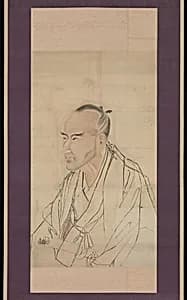
Medium
Hanging scroll; ink and color on paper
Dimensions
29 1/8 x 17 in. (74 x 43.2 cm)
Classification
Paintings
Culture & Period
Japan · Edo period (1615–1868)
Department
Asian Art
Museum
Metropolitan Museum of Art, New York, NY
Credit
The Harry G. C. Packard Collection of Asian Art, Gift of Harry G. C. Packard, and Purchase, Fletcher, Rogers, Harris Brisbane Dick, and Louis V. Bell Funds, Joseph Pulitzer Bequest, and The Annenberg Fund Inc. Gift, 1975
Accession Number
1975.268.114
Rights
Public Domain
Tags
Art Historical Context
This delicate hanging scroll, *Sketch for the Portrait ofihara Suiken* by Watanabe Kazan (179–1841), offers a glimpse into late Edo-period (1615–1868) Japanese portraiture. Created in the 19th century, it served as a preparatory study for a renowned full portrait of Suiken (1770–1823), a distinguished poet, calligrapher, and scholar. Watanabe, a samurai-turned-artist from Nagoya, captured Suiken's thoughtful demeanor with subtle ink washes and light colors on paper, hinting at the realistic style that defined his work amid Japan's isolationist era. As a master of *nanga* (Southern school) painting—influenced by Chinese literati traditions—Watanabe blended fluid brushwork with lifelike observation, bridging traditional East Asian aesthetics and emerging Western realism smuggled into Japan. This sketch exemplifies his innovative approach to portraiture, where everyday intellectuals like Suiken were elevated to heroic status, reflecting Edo society's reverence for scholarship during a time of political tension before the Meiji Restoration. Displayed as a hanging scroll (29 1/8 x 17 in.), the medium allowed for intimate, ceremonial viewing in homes or studies, underscoring its cultural role in honoring personal legacy. Now in the Metropolitan Museum of Art's Asian Art collection, it invites visitors to appreciate the artistry behind capturing a sitter's soul.
About the Artist
Watanabe Kazan · 1793–1841
Japanese, 1793–1841