
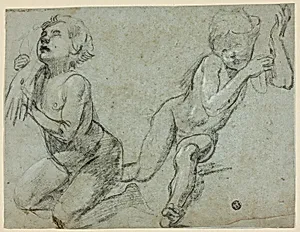
Sketches of Two Putti, One Holding Hand of Dead Christ (recto); Torso and Legs of Kneeling Figure (verso)
Medium
Black chalk, heightened with touches of white chalk (recto and verso), on blue laid paper
Dimensions
24 × 30.9 cm (9 1/2 × 12 3/16 in.)
Classification
chalk
Department
Prints and Drawings
Museum
Art Institute of Chicago
Accession Number
112357
Rights
Public Domain
Art Historical Context
Nestled in the Art Institute of Chicago's and Drawings collection, *Sketches of Two Putti, One Hand of Dead Christ*recto) and *Torso and Legs of Kne Figure* (verso) by Alessandro Casolani offers a glimpse into the intimate preparatory world of a 16th-century Sienese Mannerist master. Casolani (1552–1606), known for his elegant, elongated figures echoing Michelangelo's influence, crafted these undated studies around the late Renaissance. On the recto, playful yet poignant putti—those cherubic childlike figures symbolizing divine innocence—grasp the lifeless hand of Christ, evoking scenes from the Lamentation or Pietà, staples of Counter-Reformation piety. Executed in black chalk heightened with subtle touches of white on blue laid paper (24 × 30.9 cm), the drawings showcase Casolani's masterful use of chiaroscuro to model form and depth. The verso's fragmented kneeling figure hints at dynamic poses for larger altarpieces, revealing how artists like him iterated ideas before committing to fresco or oil. Blue paper, popular among draftsmen for its cool tonality, enhances the ethereal glow of the white highlights, mimicking moonlight or divine light. These sketches hold artistic significance as rare survivals of workshop practice, illuminating Mannerism's blend of grace and emotional intensity amid Siena's artistic golden age. For visitors, they bridge the gap between grand paintings and the artist's hand, inviting reflection on faith, mortality, and creative process.