
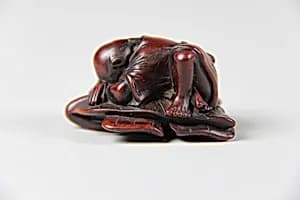
農民木彫根付|Sleeping Farmer
Unknown Artist
second half 19th century
Medium
Wood
Dimensions
H. 1 in. (2.5 cm); W. 1 1/4 in. (3.2 cm); D. 1 3/4 in. (4.4 cm)
Classification
Netsuke
Culture & Period
Japan · Meiji period (1868–1912)
Department
Asian Art
Museum
Metropolitan Museum of Art, New York, NY
Credit
Gift of Mrs. Russell Sage, 1910
Accession Number
10.211.2188
Rights
Public Domain
Tags
Art Historical Context
Behold the charming *Sleeping Farmer*, a exquisite wooden netsuke from Japan's Meiji period (1868–1912), carved by an unknown artist in the second half of the19th century. This sculpture, measuring just 1 inch high, captures a humble farmer in peaceful slumber, his relaxed pose and simple attire evoking the everyday life of rural Japan. Displayed in the Metropolitan Museum of Art Asian Art department, it was generously gifted by Mrs. Russell Sage in 191. Netsuke like this one were ingenious toggles, securing inro (small medicine or tobacco pouches) to a wearer's kimono sash before belts became common. Crafted from wood, it showcases the netsuke carver's mastery of intricate detailing on a miniature scale—evident in the farmer's rumpled clothing folds, serene expression, and natural wood grain that adds tactile warmth. During the Meiji era, as Japan embraced modernization, these functional art pieces preserved traditional craftsmanship amid rapid change. This piece highlights netsuke's cultural role as wearable sculpture, blending utility with whimsy. Farmers were popular subjects, symbolizing diligence and the joys of rest, offering a delightful glimpse into Edo-period influences lingering into Meiji times. A perfect pocket-sized treasure for any visitor!