
Sleeve Band
Unknown Artist
19th century
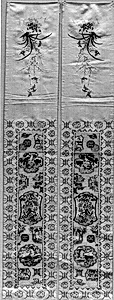
Medium
Silk, metallic thread
Dimensions
39 x 6 in. (99.06 x 15.24 cm)
Classification
Textiles-Embroidered
Culture & Period
China · Qing dynasty (1644–1911)
Department
Asian Art
Museum
Metropolitan Museum of Art, New York, NY
Credit
Bequest of William Christian Paul, 1929
Accession Number
30.75.200
Rights
Public Domain
Art Historical Context
This exquisite *Sleeve Band* from19th-century Qing dynasty China (1644–1) is a masterful example of embroidered textiles, crafted by an unknown artist using luxurious silk and shimmering metallic threads. Measuring an elongated 39 x 6 inches, it was likely designed as a decorative cuff or border for elite garments, adorning the sleeves of robes worn by the imperial court or affluent families. Such bands were integral to Manchu fashion, emphasizing status and elegance during the Qing era, a time of refined craftsmanship amid China's last imperial dynasty. The embroidery technique showcases the pinnacle of Chinese textile artistry, with intricate stitching that intertwined silk's softness with metallic threads' gleam to create vibrant patterns—often symbolic motifs like flowers, bats, or dragons evoking prosperity and protection. This opulent medium not only highlighted technical virtuosity but also reflected the era's cultural reverence for textiles as wearable art, blending functionality with profound symbolism. Today, housed in the Metropolitan Museum of Art's Asian Art Department through the 1929 bequest of William Christian Paul, this sleeve band offers visitors a tactile glimpse into Qing opulence, reminding us how everyday adornments carried layers of historical and aesthetic depth.