
Sleeve Band
Unknown Artist
19th century
Medium
Silk; on silk
Dimensions
37 1/2 x 15 in. (95.25 x 38.10 cm)
Classification
Textiles-Embroidered
Culture & Period
China · Qing dynasty (1644–1911)
Department
Asian Art
Museum
Metropolitan Museum of Art, New York, NY
Credit
Bequest of William Christian Paul, 1929
Accession Number
30.75.503
Rights
Public Domain
Tags
Art Historical Context
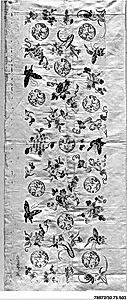
This exquisite *Sleeve Band* from 19th-century Qing dynasty China1644–1911) showcases the pinnacle of imperial textile artistry. Crafted from silk and meticulously embroidered on silk, this, narrow band—measuring 37½ x 15 inches— have adorned the sleeves of elite robes, adding a touch of opulent decoration to formal attire. Produced during the Qing era, when Manchu rulers embraced Han Chinese embroidery traditions while infusing their own stylistic flair, such pieces highlight the dynasty's prosperity and refined craftsmanship. The design bursts with delicate butterflies fluttering amid lush leaves, motifs rich in symbolism. Butterflies often represent joy, transformation, and conjugal love in Chinese culture, while leaves evoke renewal and the harmony of nature—auspicious themes perfect for garments worn during celebrations or courtly occasions. The embroidery techniques, likely employing fine satin stitches and padding for dimension, demonstrate the skill of anonymous workshops, where artisans layered threads to create lifelike texture and vibrant color on the luxurious silk ground. Now housed in the Metropolitan Museum of Art's Asian Art Department, thanks to the 1929 bequest of William Christian Paul, this sleeve band offers a glimpse into Qing daily luxury. It reminds us how textiles were not just functional but profound expressions of cultural identity and artistry.