
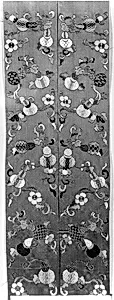
Sleeve Band
Unknown Artist
19th century
Medium
Silk, metallic thread; on silk
Dimensions
26 3/4 x 2 3/4 in. (67.94 x 6.99 cm)
Classification
Textiles-Embroidered
Culture & Period
China · Qing dynasty (1644–1911)
Department
Asian Art
Museum
Metropolitan Museum of Art, New York, NY
Credit
Bequest of William Christian Paul, 1929
Accession Number
30.75.539
Rights
Public Domain
Tags
Art Historical Context
This exquisite *Sleeve Band* from 19th-century Qing dynasty China (1644–1) is a finely embroidered textile strip, measuring 26¾ x 2¾ inches, crafted from silk with shimmering metallic threads. Designed to adorn the sleeves of traditional robes, it exemplifies the opulent embroidery traditions of the era, where such bands elevated everyday garments into displays of artistry and status. The piece features delicate floral motifs—a hallmark of Chinese textile design—stitched with precision using silk and metallic threads for a luxurious, reflective sheen. Qing embroidery techniques, like satin stitch and couching, created textured depth and vibrancy, reflecting the dynasty's peak in textile production. These bands were particularly associated with Manchu women's attire, blending functionality with aesthetic splendor. Housed in the Metropolitan Museum of Art's Asian Art Department, this artifact, bequeathed by William Christian Paul in 1929, offers a glimpse into imperial China's material culture. Flowers symbolized prosperity and harmony, making such adornments not just beautiful, but culturally resonant tokens of good fortune.