
Sleeve supports
Unknown Artist
ca. 1827
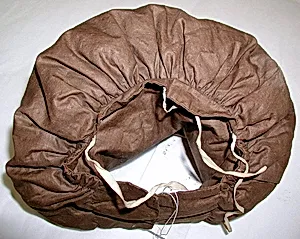
Medium
cotton
Classification
Sleeve Supports
Culture
American
Department
Costume Institute
Museum
Metropolitan Museum of Art, New York, NY
Credit
Gift of The New York Historical Society, 1979
Accession Number
1979.346.140
Rights
Public Domain
Art Historical Context
Step into the world of 1820s fashion with these delicate *Sleeve supports*, crafted around 1827 from lightweight cotton. Housed in the Metropolitan Museum of Art's Costume, this gift from The New York Historical offers a glimpse into the ingenuity of everyday attire. These unassuming supports were essential undergarments, designed to prop up the voluminous "leg-of-mutton" sleeves that defined women's dresses of the era—ballooning dramatically at the upper arm before tapering to a fitted cuff. In the early 19th century, American women embraced European trends from Paris and London, but adapted them with practical, homegrown materials like cotton, abundant in the young United States. These supports, likely padded or structured inserts worn beneath bodices, created the exaggerated silhouette symbolizing elegance and prosperity. Without them, the soft fabrics of the time couldn't hold such dramatic shapes, revealing how fashion relied on hidden engineering. Though created by an unknown artist, these pieces highlight the artistry in functional costume design—sewing techniques that balanced support with comfort. They remind us that beauty in the 1820s was as much about clever construction as couture, bridging utility and style in America's evolving cultural landscape. (198 words)