
Sleutel
Unknown Artist
c. 1600
Medium
iron (metal)
Dimensions
25.2; 7.3
Rights
Public Domain
About this artwork
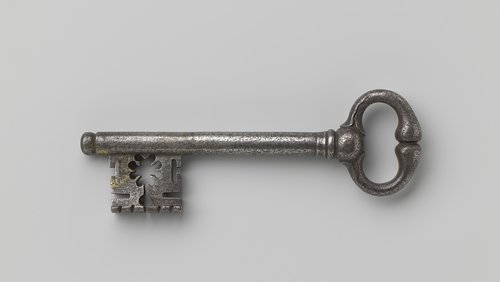
Sleutel waarvan het oog gevormd wordt uit twee naar elkaar toegewende C-voluten, die boven uivormig eindigen en onderaan gespleten zijn, een kogel vasthoudend. De schacht is bovenaan geprofileerd en eindigt onderaan in een knop. De baard heeft een rozetvormige uitsnijding.
Art Historical Context
Behold the intricately crafted *Sleutel*, a iron key from around 1600, measuring 25.2 cm long and 7.3 cm wide. This anonymous artisan's masterpiece features a bow shaped by two facing C-shaped volutes—elegant scrolls that swell into bulbous onion-like tips above and split below to cradle a spherical ball. The profiled stem tapers to a knop at the base, while the bit boasts a delicate rosette-shaped cutout, blending functionality with ornate flourish. Forged during the late Renaissance in what was likely the Low Countries (given the Dutch terminology), this key exemplifies the period's advanced metalworking techniques. Iron, durable yet challenging to manipulate, was heated, hammered, and meticulously filed to achieve such refined curves and profiles. Ornate keys like this were more than mere tools; they secured valuable chests, doors, or ecclesiastical relics, often symbolizing authority and trust in a time when locks guarded wealth amid rising trade and urban growth. Today, *Sleutel* invites us to marvel at everyday artistry from four centuries past. Its whimsical volutes and rosette evoke the decorative motifs of Mannerist architecture, reminding visitors that even humble objects carried profound aesthetic ambition. A true gem of functional sculpture!