
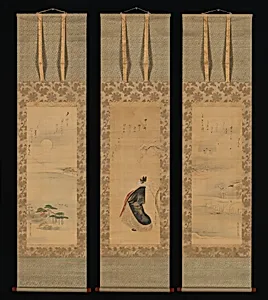
蜀山人(大田 南畝)賛 雪・月・花図 |Snow, Moon, and Cherry Blossoms (Yoshiwara in Three Seasons)
early 19th century
Medium
Triptych of hanging scrolls; ink, color, and gold on silk
Dimensions
Image (a): 32 3/8 × 11 13/16 in. (82.3 × 30 cm) Overall with mounting (a): 65 1/2 × 16 3/8 in. (166.3 × 41.6 cm) Overall with knobs (a): 65 1/2 × 18 9/16 in. (166.3 × 47.2 cm) Image (b): 32 3/8 × 11 13/16 in. (82.2 × 30 cm) Overall with mounting (b): 65 1/2 × 16 7/16 in. (166.3 × 41.7 cm) Overall with knobs (b): 65 1/2 × 18 9/16 in. (166.3 × 47.2 cm) Image (c): 32 3/8 × 11 3/4 in. (82.2 × 29.9 cm) Overall with mounting (c): 65 3/8 × 16 7/16 in. (166 × 41.7 cm) Overall with knobs (c): 65 3/8 × 18 9/16 in. (166 × 47.2 cm)
Classification
Paintings
Culture & Period
Japan · Edo period (1615–1868)
Department
Asian Art
Museum
Metropolitan Museum of Art, New York, NY
Credit
Mary Griggs Burke Collection, Gift of the Mary and Jackson Burke Foundation, 2015
Accession Number
2015.300.142a–c
Rights
Public Domain
Tags
Art Historical Context
Chōbunsai Eishi's *Snow, Moon, and Cherryossoms (Yoshiwara in Three Seasons is a stunning triptych of hanging from the early 19 century, crafted during Japan's Edo period (1615–1868). This work, rendered in ink, color, gold on silk, measures over five feet tall when mounted, designed for intimate display in a private setting. Each of the three panels captures a distinct season in Yoshiwara, the famed pleasure district of Edo (modern Tokyo): winter snow, autumn moonlit nights, and spring cherry blossoms. Elegant women—likely courtesans—grace the scenes alongside flowers and boats, evoking the transient beauty of urban life. In Edo-period Japan, such depictions celebrated the "floating world" of pleasure quarters, where artists like Eishi excelled in portraying refined femininity and seasonal poetry. The inscription by poet Shokanson (Ōta Nampū) adds a literary layer, praising the timeless motifs of snow, moon, and flowers—symbols of nature's fleeting splendor. Eishi's delicate brushwork and lavish gold accents highlight his mastery of silk painting, a prestigious medium contrasting the more common woodblock prints. Part of the Mary Griggs Burke Collection at The Metropolitan Museum of Art, this triptych invites visitors to savor the harmonious blend of sensuality, nature, and artistry that defined Edo culture. Pause and let its golden glow transport you to Yoshiwara's shimmering world.
About the Artist
Chōbunsai Eishi · 1756–1829
Japanese, 1756–1829