
Snuff Bottle
Unknown Artist
19th century
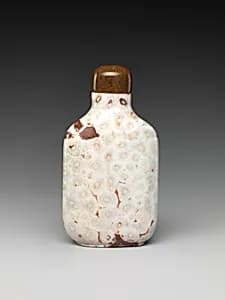
Medium
Coral root with amber stopper
Dimensions
H. 3 in. (7.6 cm)
Classification
Snuff Bottles
Culture & Period
China · Qing dynasty (1644–1911)
Department
Asian Art
Museum
Metropolitan Museum of Art, New York, NY
Credit
Bequest of Edmund C. Converse, 1921
Accession Number
21.175.207a, b
Rights
Public Domain
Art Historical Context
This exquisite snuff bottle, crafted in 19th-century China during the Qing dynasty (164–1911), exemplifies the refined artistry of a golden age for these diminutive luxury objects. Snuff bottles like this one were designed to hold powdered tobacco, a fashionable import from Europe that became a status symbol among the Chinese elite, scholars, and officials. Carried in sleeves or pockets, they served both practical and decorative purposes, often doubling as miniature sculptures that showcased the owner's taste and wealth. Made from a rare coral root with an amber stopper, this 3-inch (7.6 cm) treasure highlights the Qing era's mastery of organic materials. The coral root's natural, twisting form was likely left largely intact, emphasizing the beauty of found objects in nature—a technique that celebrated asymmetry and texture over heavy carving. Amber, prized for its warm glow and translucency, complemented the coral's vibrant hues, creating a harmonious interplay of colors and a luxurious tactile experience. Such bottles were collected avidly, reflecting broader cultural values of connoisseurship and harmony with the natural world. Now part of the Metropolitan Museum of Art's Asian Art collection, thanks to the 1921 bequest of Edmund C. Converse, this anonymous masterpiece invites visitors to ponder the intimate elegance of everyday elite life in imperial China.