
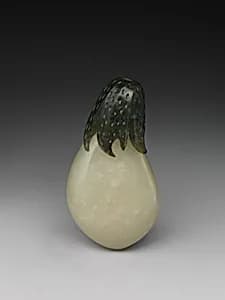
Snuff Bottle in the Shape of an Eggplant
Unknown Artist
late 18th century
Medium
Nephrite (jade)
Dimensions
H. 2 7/16 in. (6.2 cm); W. 1 5/16 in. (3.3 cm); D. 1 in. (2.5 cm)
Classification
Snuff Bottles
Culture & Period
China · Qing dynasty (1644–1911)
Department
Asian Art
Museum
Metropolitan Museum of Art, New York, NY
Credit
Gift of Heber R. Bishop, 1902
Accession Number
02.18.653
Rights
Public Domain
Tags
Art Historical Context
This exquisite snuff bottle, crafted in the late 18th century during China’s Qing dynasty, exemplifies the refined artistry of imperial-era jade carving. Made from nephrite, a stone prized for its cool touch and translucent glow, the piece measures just over two inches tall and takes the whimsical form of an eggplant. Its compact size made it ideal for carrying powdered tobacco, a habit introduced to China through European trade and embraced by scholars and elites alike. In Qing court culture, snuff bottles served both practical and decorative purposes, often exchanged as gifts among the nobility. Artisans skillfully exploited nephrite’s natural veining to suggest the vegetable’s subtle purple hues and textured skin, demonstrating exceptional technical mastery. Though the artist remains unknown, the bottle reflects the period’s fascination with natural forms rendered in precious materials. Donated to the Metropolitan Museum in 1902 by Heber R. Bishop, this delicate object highlights jade’s enduring symbolic value in Chinese art—representing purity, longevity, and harmony with nature. Its charming eggplant shape may evoke prosperity and fertility, themes frequently celebrated in decorative arts of the era.