
Socket Brace for Knife (Uragawara)
Unknown Artist
19th century
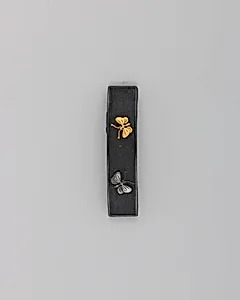
Medium
Copper-gold alloy (shakudō), gold, silver
Dimensions
L. 1 1/4 in. (3.2 cm); Wt. 0.1 oz. (2.8 g)
Classification
Sword Furniture
Culture
Japanese
Department
Arms and Armor
Museum
Metropolitan Museum of Art, New York, NY
Credit
Gift of a Trustee of the Museum, 1917
Accession Number
17.208.78
Rights
Public Domain
Tags
Art Historical Context
This exquisite *Socket Brace for Knife (ragawara)*, a 19th-century Japanese artifact from the Metropolitan Museum of Art's Arms and Armor collection, exemplifies the masterful metalwork of Edo-period sword fittings. Measuring just 1 1/4 inches long weighing a mere 0.1 ounce, this tiny uragawara— a socket or ferrule securing the scabbard of a tanto (knife)—highlights how even functional samurai accessories were elevated to art. Gifted to the museum in 1917 by a trustee, it reflects Japan's tradition of blending utility with aesthetic refinement during a time when sword-bearing warriors symbolized honor and status. Crafted from shakudō (a copper-gold alloy prized for its deep, velvety black patina after chemical treatment), the piece is enriched with inlays of gold and silver, creating subtle contrasts and luminosity. Delicate butterfly motifs, likely etched or damascened into the surface, evoke nature's grace—symbols of transformation and fleeting beauty in Japanese culture. These techniques, rooted in centuries-old metalworking guilds, demanded extraordinary precision on such a small scale. As "sword furniture," this uragawara underscores the cultural reverence for blades in feudal Japan, where fittings like these were personalized heirlooms. Though diminutive, it invites visitors to marvel at the unseen artistry of the samurai world.