
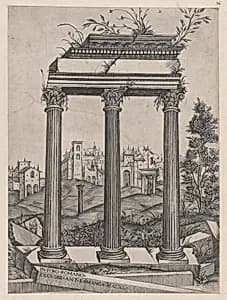
Speculum Romanae Magnificentiae: Temple of Antoninus and Faustina
Medium
Engraving
Dimensions
sheet: 11 5/8 x 8 7/16 in. (29.5 x 21.5 cm)
Classification
Prints
Department
Drawings and Prints
Museum
Metropolitan Museum of Art, New York, NY
Credit
Harris Brisbane Dick Fund, 1941
Accession Number
41.72(1.36)
Rights
Public Domain
Tags
Art Historical Context
Step into the grandeur of ancient Rome through this exquisite 16th-century engraving the *Speculum Romanae Magnificentiae* ("Mirror of Roman Magnific"), a celebrated series that captured the Eternal City's architectural wonders. Created by the skilled Italian engraver Agostinoiano (Agostino dei Musi) and published by Antonio Salamanca, it depicts the majestic Temple of Antoninus and Faust. Built in 141 CE to honor Emperor Antoninus Pius and his wife Faustina, the temple's towering columns and ornate pediment—faithfully rendered here—stand as enduring symbols of Imperial Rome's splendor, later repurposed as a Christian church. Engravings like this one were revolutionary in the Renaissance, allowing precise reproduction and widespread dissemination of classical antiquities. Veneziano's meticulous line work highlights the temple's Corinthian columns and intricate details, showcasing his mastery of the burin technique on a modest sheet (11 5/8 x 8 7/16 in.). Part of the Metropolitan Museum of Art's Drawings and Prints collection (Harris Brisbane Dick Fund, 1941), it reflects the era's fervent revival of Roman heritage, fueling architects, artists, and scholars during the High Renaissance. This print not only preserves a slice of antiquity but invites us to marvel at Rome's layered history—from pagan worship to modern admiration—reminding visitors of the timeless allure of its monumental legacy.