
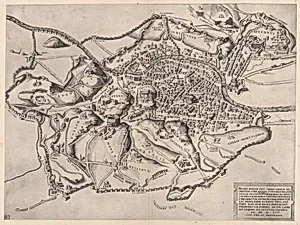
Speculum Romanae Magnificentiae: View of Rome from the East
16th century
Medium
Engraving
Dimensions
sheet: 19 3/4 x 26 1/2 in. (50.2 x 67.3 cm) plate: 13 7/8 x 18 9/16 in. (35.2 x 47.1 cm)
Classification
Prints
Department
Drawings and Prints
Museum
Metropolitan Museum of Art, New York, NY
Credit
Harris Brisbane Dick Fund, 1941
Accession Number
41.72(1.5)
Rights
Public Domain
Tags
Art Historical Context
Nicolas Beatrizet’s 16th-century engraving, “View of Rome from the East,” forms part of the celebrated *Speculum Romanae Magnificentiae* (“Mirror of Roman Magnificence”), a renowned series of prints that captured the Eternal City’s ancient and modern wonders. Created a French engraver active in Rome, the work offers a sweeping panoramic perspective that functions almost like an early map, guiding viewers across the urban landscape from an elevated eastern vantage point. During the Renaissance, such detailed engravings played a vital role in documenting and disseminating Rome’s architectural heritage to scholars, pilgrims, and collectors across Europe. Beatrizet’s precise line work and careful attention to topography reflect the period’s growing antiquarian interest, blending artistic skill with cartographic accuracy to celebrate the city’s enduring grandeur. As a print medium, engraving allowed these images to be reproduced and shared widely, shaping how people far from Italy imagined and studied classical antiquity. Today, this sheet in the Metropolitan Museum’s collection continues to invite viewers to explore Rome’s layered history through the eyes of a 16th-century artist.