
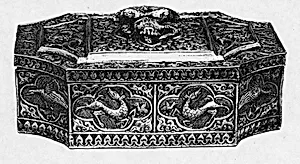
Spice Box (Pandan)
Unknown Artist
late18th–early 19th century
Medium
Brass
Dimensions
H. 2 5/16 in. (5.9 cm); W. 6 in. (15.2 cm)
Classification
Metalwork
Culture
India (or Nepal?)
Department
Asian Art
Museum
Metropolitan Museum of Art, New York, NY
Credit
Edward C. Moore Collection, Bequest of Edward C. Moore, 1891
Accession Number
91.1.610
Rights
Public Domain
Tags
Art Historical Context
Nestled in the Metropolitan Museum of Art's Asian Art collection, this delicate brass Spice Box, known as a *pandan*, hails from India—or possibly Nepal—dating to the late 18th or early 19th century Measuring just 2 5/16 inches high and 6 inches wide, its compact form made it perfectly portable, a testament to the exquisite metalworking traditions of South Asia. Crafted from gleaming brass, this piece exemplifies the region's mastery of hammered and repoussed techniques, though specific decorative details remain a mystery to us today. In daily life, a *pandan* served as more than mere storage; it held betel nuts, spices, lime paste, and other essentials for preparing *paan*—a cherished masticatory enjoyed across social classes for refreshment and hospitality. These boxes were status symbols in households, blending utility with subtle elegance during a time of cultural flourishing amid colonial influences. Bequeathed by collector Edward C. Moore in 1891, this artifact invites us to ponder the intimate rituals of bygone eras, where even the smallest object carried profound cultural weight. A quiet gem of metalwork, it bridges the everyday and the artistic in South Asian heritage.