
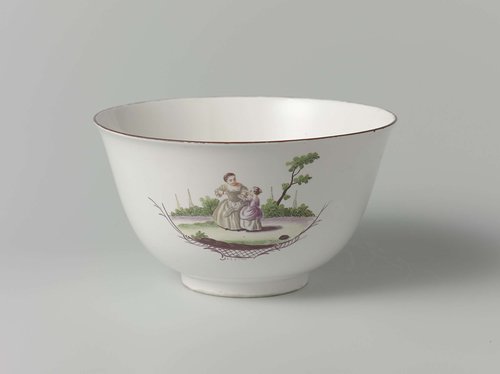
Spoelkom, beschilderd in paars met een vrouwenfiguur in een landschap
c. 1759 - c. 1771
Medium
painting technique
Dimensions
18.3; 10.3
Rights
Public Domain
About this artwork
hoogte 10,3 cm x diameter 18,3 cm
Art Historical Context
### Spoelkom, Painted in Purple with a Female Figure a Landscape This delicate *spoelkom*, or washbasin, hails from the Weesper porseleinfabriek, of the Netherlands' pioneering porcelain factories established in Weesp around 1753. Produced circa 1759–1771, it measures a modest height of .3 cm and diameter of 183 cm, making it a practical yet elegant item for daily hygiene rituals in affluent 18th-century Dutch households. The factory specialized in soft-paste porcelain, often imitating finer European and Chinese wares, and this piece exemplifies their ambition to bring luxury ceramics to local markets. Adorned in a striking purple monochrome—likely achieved through overglaze enamel painting—the basin features a graceful female figure set against a pastoral landscape. This painting technique, fired at lower temperatures to fuse colors onto the glazed surface, allowed for intricate details without compromising the porcelain's translucency. Such motifs drew from Rococo influences, blending whimsy with naturalism popular in the mid-1700s. Historically, objects like this highlight the Dutch Golden Age's fading glow into the Enlightenment, where porcelain symbolized refined taste amid growing trade rivalries. The Weesp factory's short-lived output (closing by 1783) underscores the challenges of competing with giants like Meissen, yet pieces like this survive as charming testaments to innovative local craftsmanship and cultural aspiration.