
Spoon
Unknown Artist
ca. 550–500 BCE
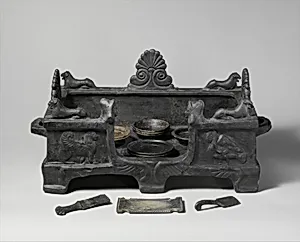
Medium
Terracotta
Dimensions
length 4 3/4in. (12.1cm)
Classification
Vases
Culture & Period
Etruscan · Archaic
Department
Greek and Roman Art
Museum
Metropolitan Museum of Art, New York, NY
Credit
Purchase, 1896
Accession Number
96.9.145i
Rights
Public Domain
Art Historical Context
This delicate terracotta spoon, dating to around 550–500 BCE, hails from the vibrant Etruscan culture of ancient Italy during the Archaic period. Etruscans, a sophisticated civilization flourishing before the rise of Rome, were renowned for their craftsmanship in everyday and ceremonial objects. This small implement, just 4¾ inches long, offers a glimpse into their daily life, possibly used for serving food, liquids, or even ritual offerings in households or sanctuaries. Acquired by the Metropolitan Museum of Art through purchase in 1896 it now resides in the Greek and Roman Art department, classified among vases despite its spoon-like form—a testament to the blurred lines between utility and artistry in antiquity. Crafted from terracotta, a fired clay medium central to Etruscan production, the spoon exemplifies the period's practical yet refined pottery techniques. Likely wheel-thrown or molded and then kiln-fired for durability, it reflects the Etruscans' mastery of clay, influenced by Greek trade but distinctly their own. Such objects highlight the culture's prosperity through commerce and agriculture, bridging the domestic sphere with artistic expression. Though simple in design, this spoon underscores the Etruscans' enduring legacy—their innovations in art and engineering profoundly shaped Roman traditions, making even humble artifacts like this one windows into a lost world.