
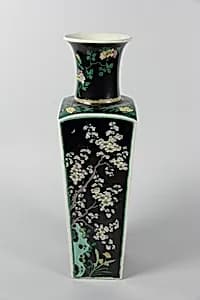
Square vase with flowers of four seasons
Unknown Artist
late 17th–early 18th century
Medium
Porcelain painted in polychrome enamels over black ground (Jingdezhen ware, famille noire)
Dimensions
H. 19 1/2 in. (49.5 cm)
Classification
Ceramics
Culture & Period
China · Qing dynasty (1644–1911), Kangxi period (1662–1722)
Department
Asian Art
Museum
Metropolitan Museum of Art, New York, NY
Credit
Bequest of Benjamin Altman, 1913
Accession Number
14.40.428
Rights
Public Domain
Tags
Art Historical Context
This elegant square vase, standing 19½ inches tall, originates from Jingdezhen, China's renowned porcelain capital, during the Kangxi period (2–1722) of the Qing dynasty. Craft in the late 17th to early 18th century it features porcelain painted in vibrant polychrome enamels over a glossy black ground—a style known as *famille noire*. The vase's square form and decoration of flowers representing the four seasons evoke the beauty of nature, a symbolizing harmony and completeness in Chinese culture. *Familie noire* ware marked a pinnacle of technical innovation at Jingdezhen's imperial kilns, where artisans mastered overglaze enamels fired at lower temperatures to achieve luminous, jewel-like colors against the dramatic black base. Popular for both imperial courts and export markets, these vases blended functionality with opulent display, reflecting the Kangxi emperor's patronage of the arts and porcelain's role as a global luxury good. Bequeathed to the Metropolitan Museum of Art by Benjamin Altman in 1913, this piece highlights Qing ceramics' enduring allure. Its floral symbolism draws from traditional Chinese aesthetics, inviting viewers to appreciate the delicate balance of form, color, and seasonal poetry in everyday elegance.