
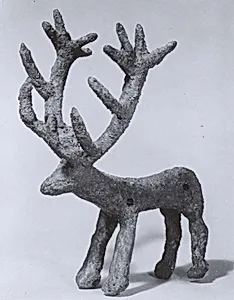
Stag figure
Unknown Artist
ca. early 1st millennium BCE
Medium
Bronze
Dimensions
4 in. × 2 5/16 in. × 2 13/16 in. (10.2 × 5.9 × 7.1 cm)
Classification
Metalwork-Sculpture
Culture & Period
Iran · Iron Age II
Department
Ancient Near Eastern Art
Museum
Metropolitan Museum of Art, New York, NY
Credit
Gift of Norbert Schimmel, 1959
Accession Number
59.14
Rights
Public Domain
Tags
Art Historical Context
This exquisite bronze stag figure, dating to the early 1st millennium BCE during Iran's Iron Age II period, captures the grace and vitality of the deer in miniature form. Standing just 4 inches tall, this metalwork sculpture from the Ancient Near East exemplifies the skilled craftsmanship of anonymous artisans who cast intricate animal forms using the lost-wax technique, a sophisticated method that allowed for detailed modeling of the stag's alert posture, slender legs, and branching antlers. In the cultural landscape of ancient Iran, such small bronze figures likely served ritual or decorative purposes, perhaps as votive offerings at shrines or attachments to furniture and horse gear. Deer motifs symbolized speed, fertility, and the wild, resonating with nomadic and pastoral societies of the Iron Age, where metalworking flourished amid trade routes connecting Mesopotamia and Central Asia. The figure's compact size and dynamic stance highlight the era's artistic focus on naturalistic yet stylized animals, bridging utility and symbolism. Today, this treasure resides in the Metropolitan Museum of Art's Department of Ancient Near Eastern Art, a gift from Norbert Schimmel in 1959. It invites us to ponder the daily lives and spiritual beliefs of Iron Age Iranians, where even a small stag evoked the untamed power of nature.