
Stamp
Unknown Artist
ca. 1295–1070 B.C.
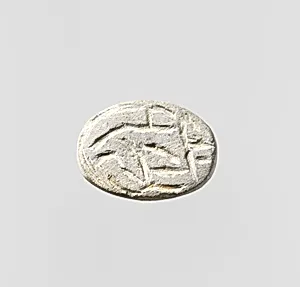
Medium
Limestone
Dimensions
L. 2.4 × W. 1.8 × H. 1.7 cm (15/16 × 11/16 × 11/16 in.)
Classification
Stamp, disk
Period
New Kingdom, Ramesside
Department
Egyptian Art
Museum
Metropolitan Museum of Art, New York, NY
Credit
Rogers Fund, 1915
Accession Number
15.3.702
Rights
Public Domain
Art Historical Context
This petite limestone stamp, dating to around 1295–1070 B.C., hails from Egypt's New Kingdom during the Ramesside period (Dynasties 19–20). Crafted by an unknown artist, it measures just 2.4 × 1.8 × 1.7 cm, small enough to fit in the palm of your hand. Acquired through the Rogers Fund in 1915, it now resides in the Metropolitan Museum of Art's Egyptian Art collection. In the height of Egypt's imperial power—think monumental temples and epic battles under pharaohs like Ramesses II—these stamps served practical purposes in daily administration. Likely used to imprint clay or wax seals on documents, goods, or doors, they authenticated ownership and prevented tampering in a bustling bureaucracy. Limestone, a readily available and durable medium, was ideal for such tools, allowing fine carving despite the object's miniature scale. What fascinates is the precision of its craftsmanship: intricate designs etched into hard stone reveal the skill of Ramesside artisans. Though its exact motif remains unnoted here, such stamps often bore hieroglyphs, royal symbols, or protective emblems, blending utility with cultural reverence for order and magic. A window into ancient Egypt's organized world!