
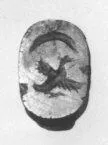
Stamp seal (scarab) with animal
Unknown Artist
ca. 9th–7th century BCE
Medium
Hematite
Dimensions
Seal Face: 1.13 x 0.75 cm Height: 0.48 cm
Classification
Stone-Stamp Seals
Culture & Period
Phoenician · Iron Age II
Department
Ancient Near Eastern Art
Museum
Metropolitan Museum of Art, New York, NY
Credit
Gift of David Dows, 1945
Accession Number
45.4.18
Rights
Public Domain
Tags
Art Historical Context
This petite Phoenician stamp seal, from hematite around the 9th–7th BCE during Iron Age II, exemplifies the exquisite craftsmanship of ancient Near Eastern artisans. Shaped as a scarab beetle—a potent symbol of rebirth and protection borrowed from Egyptian iconography—the seal's face measures just 1.13 x 0.75 cm, with a total height of 048 cm. Its compact form belies its practical power: when pressed into soft clay, it would leave an impression of an animal motif, likely a bird, for marking documents, goods, or amulets. Hematite, a dense and lustrous iron ore prized for its durability and metallic sheen, was ideal for such seals, ensuring longevity in daily administrative or ritual use. Phoenician traders and scribes, masters of the Mediterranean world, adapted these tools from Mesopotamian and Egyptian traditions, blending them with local motifs to assert identity and authority. This example, a gift to the Metropolitan Museum of Art in 1945, highlights the seafaring culture's role in cultural exchange. Though tiny, the seal whispers of a vibrant era when Phoenicians innovated alphabets and commerce, using such objects to seal alliances and safeguard secrets across ancient trade routes. A window into their magical worldview, it invites us to ponder the lives of those who held it.