
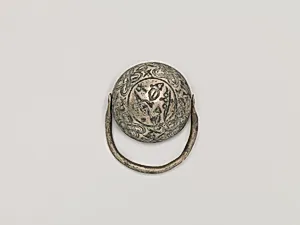
Stamp seal with a handle and a hieroglyphic inscription
Unknown Artist
ca. 14th–13th century BCE
Medium
Silver
Dimensions
Diameter 2.54 cm Height: 1.3 cm
Classification
Metalwork-Stamp Seals-Inscribed
Culture & Period
Hittite · Hittite Empire
Department
Ancient Near Eastern Art
Museum
Metropolitan Museum of Art, New York, NY
Credit
Bequest of Edith Aggiman, 1982
Accession Number
1983.135.7
Rights
Public Domain
Tags
Art Historical Context
This exquisite silver stamp seal, crafted during the height of the Hittite Empire around the 14th–13th century BCE, offers a glimpse into the sophisticated bureaucracy of ancient Anatolia (modern-day Turkey). Measuring just 2.54 cm in diameter and 1.3 cm high, its petite size belies its importance as a tool for authentication—used to imprint clay with a raised design and hieroglyphic inscription, sealing documents, goods, or royal decrees. The convenient handle allowed for easy use, blending functionality with fine metalwork. Hittite artisans excelled in silver, a precious metal symbolizing status and wealth, likely hammered or cast and meticulously engraved with hieroglyphs—possibly Luwian script, unique to the Anatolian Hittites and distinct from Egyptian varieties. These seals were hallmarks of imperial administration, reflecting a literate society that managed vast territories through precise record-keeping. Though the exact inscription's meaning remains untranslated here, it underscores the culture's blend of art and governance. Now housed in the Metropolitan Museum of Art's Ancient Near Eastern Art collection, thanks to the 1982 bequest of Edith Aggiman, this artifact evokes the Hittites' enduring legacy as innovators in early statecraft and craftsmanship. A tiny testament to a mighty empire!