
Standing Manjushri, the Bodhisattva of Infinite Wisdom
Unknown Artist
ca. mid–9th century
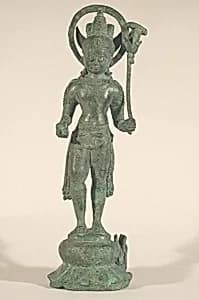
Medium
Bronze
Dimensions
H. 8 7/8 in. (22.5 cm); Diam. of base 2 7/8 in. (7.3 cm)
Classification
Sculpture
Culture & Period
Indonesia (Java) · Central Javanese period
Department
Asian Art
Museum
Metropolitan Museum of Art, New York, NY
Credit
Gift of Jeffrey B. Soref, 2001
Accession Number
2001.758.2
Rights
Public Domain
Tags
Art Historical Context
This exquisite bronze sculpture, *Standing Manjushri the Bodhisattva of Wisdom*, hails from Java, Indonesia, during the Central Javanese period around the mid-9th century.ed by an unknown artist, it stands just 8⅞ inches tall on a modest base, suggesting it was likely a portable devotional object for personal worship or temple rituals. Manjushri, a revered Bodhisattva in Mahayana, embodies transcendent wisdom, often invoked to dispel ignorance and guide practitioners toward enlightenment. The use of bronze highlights the sophisticated metalworking techniques of ancient Javanese artisans, who employed lost-wax casting to achieve finely detailed surfaces and elegant proportions. This period marked a flourishing of Buddhist and Hindu art under dynasties like the Sailendras, with Java as a vibrant center of religious sculpture. Such figures were integral to temple complexes, symbolizing divine compassion and intellectual clarity amid the island's syncretic spiritual traditions. Today, this rare survivor graces the Metropolitan Museum of Art's Asian Art department, a gift from Jeffrey B. Soref in 2001. It offers visitors a tangible link to Java's golden age of Buddhist devotion, inviting reflection on wisdom's timeless pursuit.