
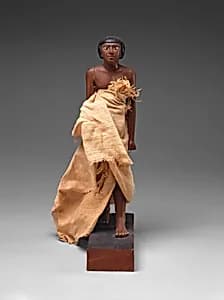
Statuette of Wah
Unknown Artist
ca. 1981–1975 B.C.
Medium
Cedar, plaster, paint, linen
Dimensions
h. 32.2 cm (12 11/16 in); w. 6.6 cm (2 5/8 in); l. 17 cm (6 11/16 in)
Classification
Statuette, standing man, Wah
Period
Middle Kingdom
Department
Egyptian Art
Museum
Metropolitan Museum of Art, New York, NY
Credit
Rogers Fund and Edward S. Harkness Gift, 1920
Accession Number
20.3.210
Rights
Public Domain
Tags
Art Historical Context
This charming wooden statuette, created around 1981–1975 B.C. during Egypt’s Middle Kingdom, depicts a man named Wah. Standing just over twelve inches tall, the figure was crafted from cedar—an imported wood valued for its durability—and finished with plaster, paint, and linen. Such statuettes were commonly placed in tombs to serve as eternal substitutes for the deceased, ensuring their spirit could continue daily activities in the afterlife. Belonging to Dynasty 12, a period of renewed political stability and artistic refinement, the piece reflects the era’s emphasis on personal commemoration. Middle Kingdom tomb figures like this one often accompanied the burial of officials or members of the elite, bridging the worlds of the living and the dead through intimate, lifelike representation. The combination of materials reveals sophisticated ancient techniques: the wood was carved with care, plaster smoothed the surface for painting, and linen may have been used to suggest clothing or ritual wrappings. Today housed in the Metropolitan Museum of Art, the statuette offers visitors a tangible connection to the beliefs and craftsmanship of one of Egypt’s most culturally vibrant ages.