
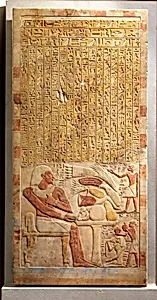
Stela of the Steward Mentuwoser
Unknown Artist
ca. 1944 B.C.
Medium
Limestone, paint
Dimensions
H. 103 cm (40 9/16 in.); W. 50.5 cm (19 7/8 in.); Th. 8.3 cm (3 1/4 in.)
Classification
Stela, Mentuwoser
Period
Middle Kingdom
Department
Egyptian Art
Museum
Metropolitan Museum of Art, New York, NY
Credit
Gift of Edward S. Harkness, 1912
Accession Number
12.184
Rights
Public Domain
Tags
Art Historical Context
This limestone stela, created around 1944 B.C. during Egypt Middle Kingdom (Dynasty 12), honors the steward Mentuwoser. Carved in sunk relief and originally painted, the rectangular slab served as a lasting memorial, allowing visitors to the tomb to recite offerings that would sustain the deceased in the afterlife. Its modest scale—roughly a meter tall—made it suitable for placement in a chapel or burial chamber, where the combination of image and text bridged the worlds of the living and the dead. The artwork’s surface is densely inscribed with hieroglyphs and scenes of food offerings, typical of Middle Kingdom funerary monuments. These elements reflect the period’s renewed emphasis on personal piety and the importance of a stable bureaucracy; stewards like Mentuwoser managed estates that supplied temples and the royal court. The careful painting of details, now only partially preserved, once heightened the realism of bread, fowl, and vessels, ensuring their magical effectiveness for eternity. As a gift to the Metropolitan Museum, the stela offers today’s visitors a direct connection to ancient Egyptian beliefs about memory, provision, and the written word’s power to preserve identity across millennia.