
Stencil
Unknown Artist
19th century
Medium
Paper, silk
Dimensions
22 3/4 x 17 in. (57.8 x 43.2 cm)
Classification
Stencils
Culture
Japan
Department
Asian Art
Museum
Metropolitan Museum of Art, New York, NY
Credit
Gift of Mrs. Horace Havemeyer, 1942
Accession Number
42.91.57
Rights
Public Domain
Tags
Art Historical Context
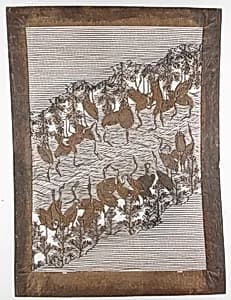
This exquisite 19th-century Japanese stencil, crafted from paper and silk, measures 22¾ x 17 inches and depicts graceful cranes—a timeless symbol of longevity, good fortune, and fidelity in Japanese culture. Housed in the Metropolitan Museum of Art's Asian Art Department (gift of Mrs. Horace Havemeyer, 1942), it exemplifies the refined artistry of anonymous craftsmen during Japan's Edo and early Meiji periods, when stencils were essential tools for katazome, a resist-dyeing technique used to adorn kimonos and textiles. The stencil's intricate design, likely featuring layered motifs of cranes in flight or perched elegantly, showcases the precision of traditional Japanese papermaking and silk reinforcement. Multiple sheets of thin, mulberry paper (washi) were meticulously cut with fine knives and bridged with silk threads to prevent tearing, allowing dyes to pass through while blocking others. This technique produced vibrant, repeatable patterns on fabric, blending utility with aesthetic beauty and influencing ukiyo-e printmaking. As a window into everyday artistry, this stencil highlights Japan's mastery of functional design, where even tools embodied poetic symbolism. Visitors will appreciate how cranes, often paired with pines or turtles, evoked wishes for eternal happiness, bridging craft and cultural reverence.