
Stencil
Unknown Artist
late 19th–early 20th century
Medium
Paper, silk
Dimensions
17 x 12 1/2 in. (43.18 x 31.75 cm)
Classification
Stencils
Culture
Japan
Department
Asian Art
Museum
Metropolitan Museum of Art, New York, NY
Credit
Gift of Miss D. Lorraine Yerkes, 1959
Accession Number
1975.90.9
Rights
Public Domain
Art Historical Context
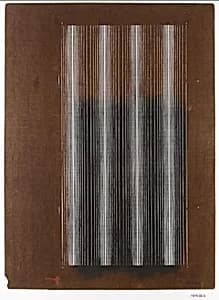
This exquisite **Stencil** from late 19th– to early 20th-century exemplifies the artistry of *katagami*, traditional stencils crafted for textile dyeing. Measuring 17 x 12½ inches and made from layered paper reinforced with silk threads, it artisans to create intricate resist patterns on fabrics like kimonos. The silk mesh prevented tearing during repeated use, showcasing the precision and ingenuity of Japanese craftsmanship during the Meiji and Taisho eras, traditional techniques endured amid rapid modernization. In the resist-dyeing process known as *katazome* or *yuzen*, these stencils were brushed with rice-paste resist, blocking dye from certain areas to produce vibrant, detailed motifs—often floral, geometric, or scenic. This medium highlights Japan's deep-rooted textile heritage, where stencils served both practical and aesthetic purposes, elevating everyday garments to wearable art. A generous gift to the Metropolitan Museum of Art from Miss D. Lorraine Yerkes in 1959, this piece invites us to appreciate the anonymous skill of its maker and the cultural elegance it helped produce.