
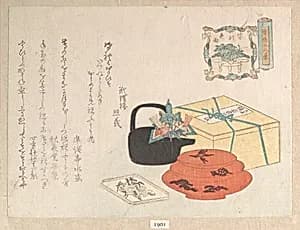
Still Life; Design of Yogoyomi; Pictorial Calendar
Medium
Woodblock print (surimono); ink and color on paper
Dimensions
5 1/2 x 7 71/6 in. (14 x 47.8 cm)
Classification
Prints
Culture & Period
Japan · Edo period (1615–1868)
Department
Asian Art
Museum
Metropolitan Museum of Art, New York, NY
Credit
H. O. Havemeyer Collection, Bequest of Mrs. H. O. Havemeyer, 1929
Accession Number
JP1901
Rights
Public Domain
Tags
Art Historical Context
This delicate woodblock print, titledStill Life; Design ofoyomi; Pictorial*, dates to 1816 during Japan's Edo period (16151868). Created by unidentified artist, it exemplifies *surimono*—luxurious, privately commissioned prints produced for special occasions like New Year's greetings. Measuring just 5½ x 7⅞ inches, its intimate scale invited close admiration, with vibrant inks and colors on paper capturing everyday objects in a harmonious still life composition. In Edo-era Japan, *yogoyomi* (pictorial calendars) blended art and utility, embedding dates within visual motifs—such as clusters of fruits, shells, or flowers where the number of items signified auspicious days. This genre flourished in the vibrant ukiyo-e tradition, transforming mundane calendars into poetic treasures shared among poets, merchants, and elites. The still life format highlights Japan's appreciation for *mujo* (impermanence), celebrating nature's fleeting beauty through meticulous detail and subtle symbolism. Part of the Metropolitan Museum of Art's H. O. Havemeyer Collection, this print offers a window into 19th-century urban culture, where art democratized seasonal rituals and fostered community bonds. A charming fusion of function and finesse!