
BK-17294-D
Unknown Artist
1500 - 1600
Medium
textile materials
Dimensions
3; 60; 40
Rights
Public Domain
About this artwork
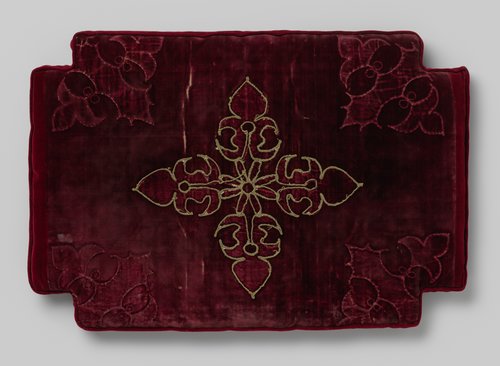
Stoelkussen van wijnrood velours, belegd met koord van gouddraad en groene zijde. In het midden een rozet van vier palmetten; in de hoeken twee palmetten ter weerszijden van een overhoeks geplaatste gekartelde stam.
Art Historical Context
This exquisite chair cushion, cataloged as BK-17294-D, dates to the 16th century (1500–1600) and exemplifies the opulent textile arts of the Renaissance era. Crafted from rich wine-red velvet and adorned with intricate cords of gold thread and silk, it measures a practical 60 × 40 × 3 cm, perfect for seating on high-status furniture. The design features a central rosette composed of four palmette motifs—stylized palm leaves evoking ancient decorative traditions—flanked in each corner by paired palmettes framing a diagonally placed, serrated stem. Such symmetry and elaboration suggest skilled embroidery or appliqué techniques, highlighting the artisan's mastery of luxurious materials. Textiles like this were prized status symbols in European courts and wealthy households, often imported or inspired by Ottoman and Persian influences via thriving Silk Road trade routes. Palmettes, a motif rooted in Islamic art, blended seamlessly into Renaissance decorative vocabulary, symbolizing fertility and elegance. The use of gold thread (passementerie) not only added shimmer but also demonstrated technical prowess in weaving and couching, techniques that preserved the piece's vibrancy over centuries. Today, this anonymous masterpiece offers a window into daily luxury, reminding us how textiles wove together cultures across continents during a golden age of global exchange. A true gem for any collection!