
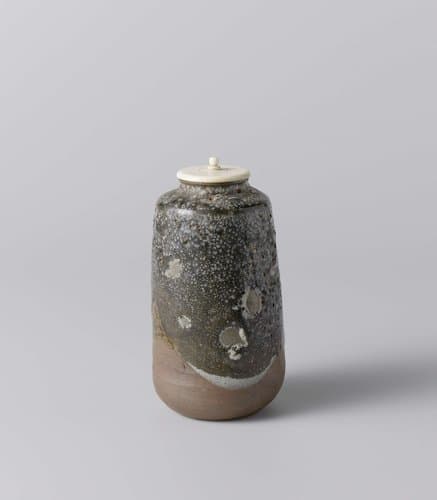
Stoftheebus met een wit gevlekt groen glazuur
c. 1610 - c. 1620
Medium
turning
Dimensions
3.4; 6.8; 12.8; 11.9; 1.6; 4.5; 3.6
Rights
Public Domain
About this artwork
height 12.8 cm
Art Historical Context
Nestled in the early 17th century, anonymous *Stoftheebus met een wit gevlekt glazuur* (Tea Caddy with White-Spotted Green Glaze exemplifies Dutch ceramic craftsmanship from around 1610–1620. Standing at a modest 12.8 cm tall, this wheel-turned earthenware vessel was designed to hold *stofthee*—finely powdered tea leaves, a novel luxury imported via Dutch East India Company traders. Its compact form and decorative glaze reflect the rising popularity of tea drinking in the Netherlands during the Golden Age, bridging exotic imports with local artistry. Crafted using the "turning" technique—shaping clay on a potter's wheel—this piece showcases precise control for a smooth, functional profile. The standout feature is its green glaze speckled with white spots, achieved through innovative firing methods that mimicked coveted Chinese porcelain. Such glazes were experimental in Europe at the time, predating Delft's famous blue-and-white wares, and highlight potters' ingenuity amid a ceramics boom fueled by global trade. Though anonymous, this theebus offers a window into everyday opulence, blending utility with subtle elegance. It invites us to savor how a simple container captured the era's cultural fusion of East and West.