
Stone Pulidor
Unknown Artist
before 16th century
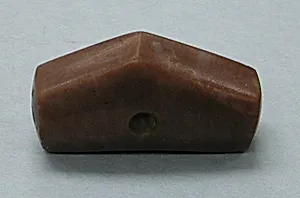
Medium
Stone
Dimensions
Length 1-7/8 in.
Classification
Stone-Implements
Culture
Mexican
Department
Arts of Africa, Oceania, and the Americas
Museum
Metropolitan Museum of Art, New York, NY
Credit
Bequest of Arthur M. Bullowa, 1993
Accession Number
1994.35.297
Rights
Public Domain
Art Historical Context
Nestled in the Metropolitan Museum of Art's collection of Arts of Africa, Oceania, and the Americas, modest **Stone Pulidor**ails from pre-16th-century Mexico. Crafted from stone and measuring just 1-7/8 inches in length, it exemplifies the practical ingenuity of ancient Mesoamerican cultures. Bequeathed by Arthur M. Bullowa 1993, this unassuming tool offers a window into the daily craftsmanship of indigenous peoples long before European contact. As a stone implement classified as a "pulidor"—Spanish for polisher—this artifact was essential for refining surfaces on jewelry, sculptures, and ceremonial objects. Ancient Mexican artisans likely gripped its compact form to smooth and burnish harder materials like jade or obsidian, achieving the lustrous finishes seen in iconic pre-Columbian works. Such tools highlight the sophisticated stone-working techniques that underpinned Mesoamerican societies, from the Olmecs to the Aztecs, blending utility with ritual precision. Though small, the Stone Pulidor speaks volumes about cultural continuity and technological prowess. It reminds us that behind the grandeur of pyramids and treasures lay everyday innovations, preserving the tactile legacy of Mexico's ancient makers for modern visitors to ponder.