
Strainer
Unknown Artist
ca. 8th–7th century BCE
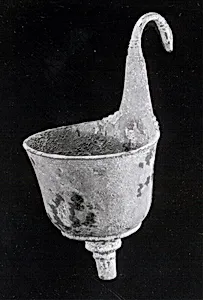
Medium
Bronze
Dimensions
6 15/16 × 3 3/4 in. (17.6 × 9.5 cm)
Classification
Metalwork-Vessels
Culture & Period
Iran · Iron Age III
Department
Ancient Near Eastern Art
Museum
Metropolitan Museum of Art, New York, NY
Credit
Purchase, H. Dunscombe Colt Gift, 1971
Accession Number
1971.69
Rights
Public Domain
Art Historical Context
This delicate bronze strainer, dating to around the 8th–7th century BCE, hails from Iron Age III Iran and exemplifies the sophisticated metalworking of the Ancient Near East. Measuring just under 7 inches long, its compact form suggests it was designed for practical use—likely straining liquids such as wine or ritual offerings—while showcasing the era's mastery of bronze casting Such vessels were essential in daily life and ceremonial practices, reflecting a culture where metallurgy played a central role in trade, status, and innovation. Bronze, an alloy of copper and tin, was prized for its durability and luster, allowing artisans to create thin, intricately shaped objects like this one through lost-wax casting or hammering techniques. In Iron Age Iran, these metalwork vessels highlight a flourishing tradition amid regional powers, bridging the late Bronze Age collapse and the rise of empires. Though the artist remains unknown, the strainer's survival speaks to the enduring craftsmanship of Iranian workshops. Today, this piece graces the Metropolitan Museum of Art's Ancient Near Eastern Art collection, acquired in 1971. It invites us to ponder the everyday ingenuity of ancient peoples, turning a simple tool into a window on a vibrant, metal-rich world.