
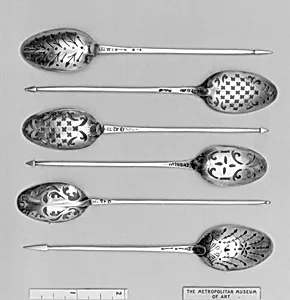
Strainer spoon
18th century
Medium
Silver
Dimensions
Length: 5 1/2 in. (14 cm)
Classification
Metalwork-Silver
Culture
British
Department
European Sculpture and Decorative Arts
Museum
Metropolitan Museum of Art, New York, NY
Credit
Rogers Fund, 1913
Accession Number
13.42.79y
Rights
Public Domain
Art Historical Context
This delicate **Strainer Spoon**, crafted by the esteemed British silversmiths Prior and Williams in the18th century, exemplifies exquisite metalwork of Georgian-era Britain. Measuring just 5½ inches (14 cm) in length this silver piece belongs to the Metropolitan Museum of Art's European Sculpture and Decorative Arts collection, acquired through the Rogers Fund in 3. Silversmithing firms like Dobson Prior and were renowned for producing high-quality tableware for affluent households, where silver objects signified wealth and refined taste. Functionally, the strainer spoon features a perforated bowl designed for culinary tasks such as draining liquids from poached eggs, sauces, or custards, blending practicality with elegance. In 18th-century Britain, such items were essential in grand kitchens and dining rooms, reflecting the period's growing emphasis on sophisticated entertaining and domestic refinement. The use of sterling silver not only ensured durability and shine but also allowed for intricate handcrafting techniques, showcasing the silversmith's mastery in shaping and perforating thin metal without compromising strength. Today, this unassuming yet charming artifact highlights the everyday artistry of British decorative arts, offering a glimpse into the opulent material culture of the Enlightenment era. Visitors to The Met can appreciate how even humble tools embodied the era's pursuit of beauty in utility.