
Strainer spoon
18th century
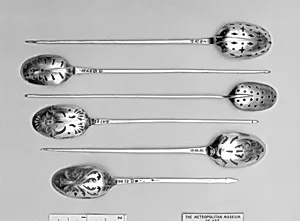
Medium
Silver
Dimensions
Length: 6 5/8 in. (16.8 cm)
Classification
Metalwork-Silver
Culture
British
Department
European Sculpture and Decorative Arts
Museum
Metropolitan Museum of Art, New York, NY
Credit
Rogers Fund, 1913
Accession Number
13.42.81b
Rights
Public Domain
Art Historical Context
Step into the refined world of 18th-century British silver craftsmanship with this charming *Strainer spoon* by John Perry, a skilled London silversmith active during the Georgian era. Crafted from gleaming silver and measuring a dainty 6 5/8 inches (16.8 cm) in length, this piece exemplifies the metalwork produced for affluent households. Acquired through the Rogers Fund in 1913, it now graces the European Sculpture and Decorative Arts at The Metropolitan Museum of Art. Strainer spoons like this one were essential kitchen and table tools, featuring perforated bowls to separate solids from liquids—perfect for serving broths, sauces, or poached eggs without the need for separate strainers. Silver, prized for its durability, shine, and antimicrobial properties, was a status symbol in British homes, often hallmarked to denote purity and maker. Perry's work reflects the period's rococo influences, blending functionality with subtle elegance in form and chasing techniques. This modest yet masterful object highlights the artistry of everyday silverware, bridging domestic life and high design in Georgian Britain. It invites us to appreciate how silversmiths like Perry elevated utilitarian items into heirlooms, preserving a slice of culinary history.